
Regrout, Repair or Remodel? A Bathroom Guide for Newton Homeowners
About half of Newton's homes were built before 1940, and their bathrooms show it. Here is how to tell if yours only needs new grout, a repair behind the tile, or a full remodel, and what each one involves in Newton.
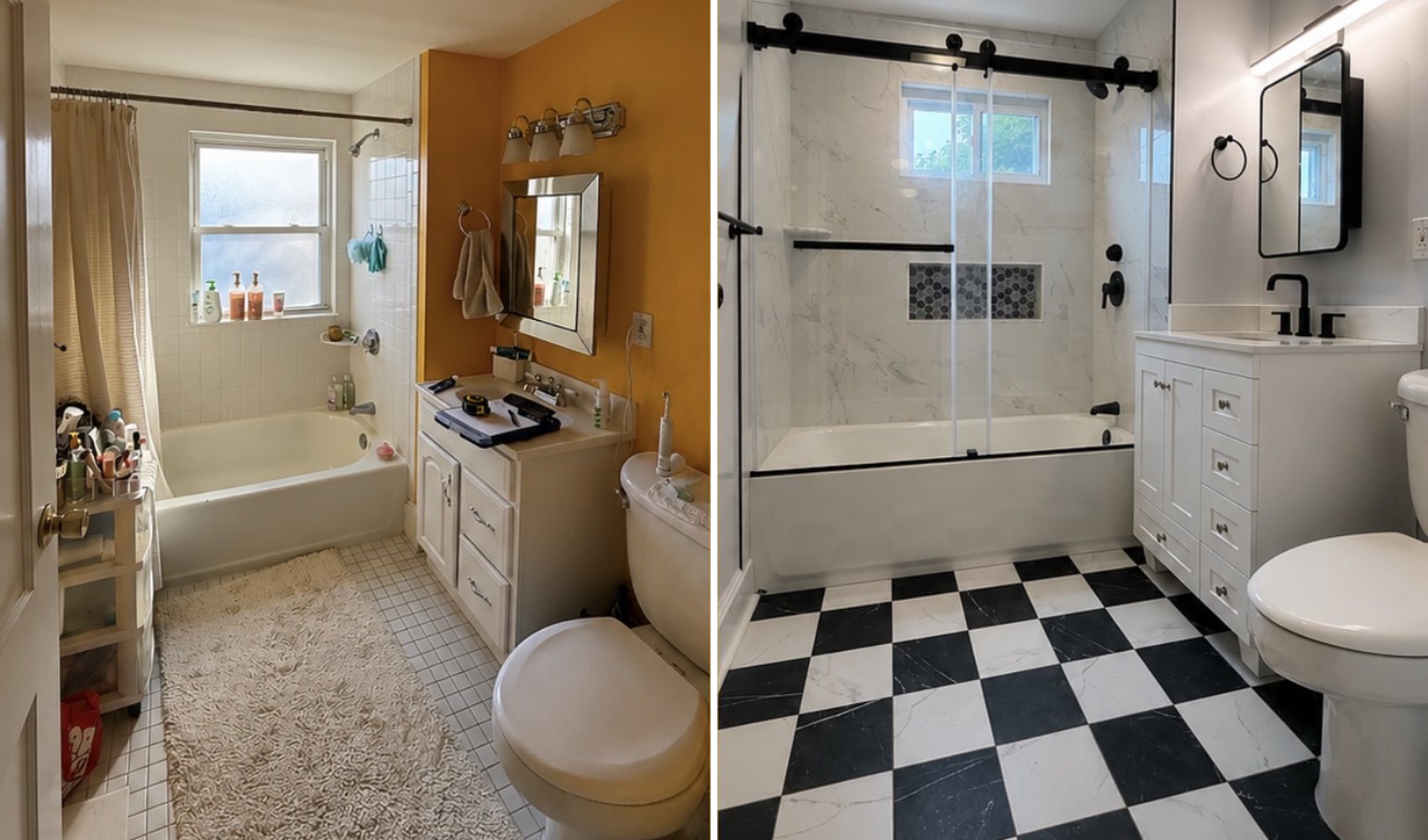
If the tiles are solid and there are no signs of water, new grout and caulk are usually enough. Loose or hollow tiles, a soft wall, or mold that keeps coming back mean water got behind the tile, and that section needs to be opened and rebuilt. When several of those show up at once, or you also want a new vanity or layout, a remodel is usually the better plan.
Quick Answers
How do I know if my bathroom only needs new grout?
Press and tap on the tiles. If they feel firm and sound solid, the walls are dry and the only problem is stained or cracked grout, regrouting and new caulk will usually do the job.
What does a hollow sound behind the tile mean?
It usually means the tile lost its bond, often because water reached the wall behind it. That spot needs a closer look before anything is covered up.
How long does a shower stay out of use after regrouting?
The work itself is usually one to two days for a standard tub surround. The shower then stays off while the grout cures, often 24 to 72 hours depending on the product.
Do I need a permit in Newton to redo my bathroom?
Regrouting and new caulk are cosmetic. Replacing or moving a faucet, toilet or shower needs a plumbing permit, and in Massachusetts only a plumber with a state license can pull it. Changing the layout or removing a wall also goes through a building permit. Newton's Inspectional Services takes these applications online.
The Five-Minute Check You Can Do Yourself
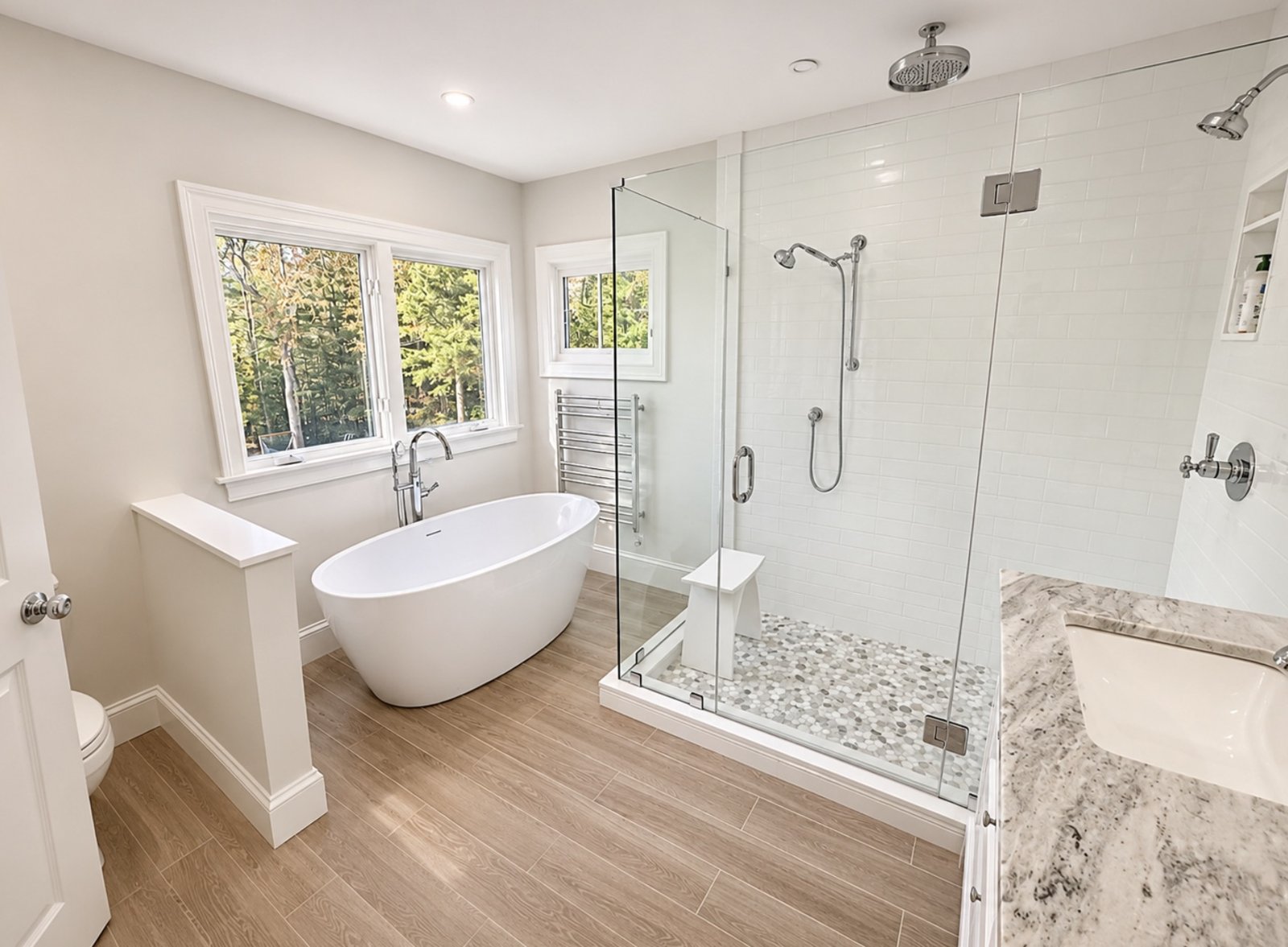
Before you call anyone, take five minutes with a flashlight. Look along the grout lines where the tub meets the wall and in the corners of the shower, since those spots take the most water. Then press on the tiles with your palm and tap them lightly with a knuckle.
Look outside the shower too. Peeling paint next to the tub, a soft spot in the floor or a stain on the ceiling below are all signs that water is going somewhere it shouldn't. In a two-story Colonial in West Newton or Auburndale, that stain often shows up in the kitchen or dining room right under the bathroom.
- The grout lines in the corners and along the tub
- Any tile that moves, cracks or sounds hollow
- The caulk around the tub and the faucet
- The wall, floor and ceiling around the bathroom
When New Grout and Caulk Are Enough
If the tiles are firmly attached, the walls feel solid and you see no signs of water outside the shower, the problem is on the surface. Grout gets stained and cracks with time, and caulk dries out and pulls away from the tub. Neither one means the shower is failing.
In that case we remove the old grout, regrout, replace the caulk at the corners and around the tub, and seal the new grout. It is the fastest way to make a shower look new and keep water where it belongs, without opening any walls.
When the Repair Has to Go Deeper
Loose tiles, tiles that sound hollow near the tub or the faucet, a wall that feels soft or crumbles, and mold that comes back right after you clean it all point to the same thing: water got behind the tile. New grout on top would only hide it for a while.
The right fix is to open that section, let it dry, replace the damaged board and rebuild it with a waterproof backer before tiling again. Done this way, the repair lasts, and you don't pay twice for the same wall.
What Is Different About a Newton Bathroom
Newton's housing is old. About 49% of the homes in the city were built in 1939 or earlier. In villages like Waban, Newton Highlands, Newtonville and Chestnut Hill, many bathrooms still have their original tile, set on a thick mortar bed or on plaster walls.
That changes the plan. Original tile is often no longer made, so a small repair can be hard to blend in. A mortar bed is very solid, but when water gets under it, the repair takes more work than on a newer cement board wall. And behind the walls of a pre-war house, it is common to find old galvanized or cast iron pipes that are worth replacing while the wall is open.
- New grout, caulk and paint: cosmetic work
- Replacing or moving a faucet, toilet, sink or shower: plumbing permit, pulled by a plumber with a Massachusetts license
- Changing the layout, removing a wall or adding a bathroom: building permit too, plus electrical where wiring changes
- Newton Inspectional Services takes these applications online
When a Full Remodel Makes More Sense
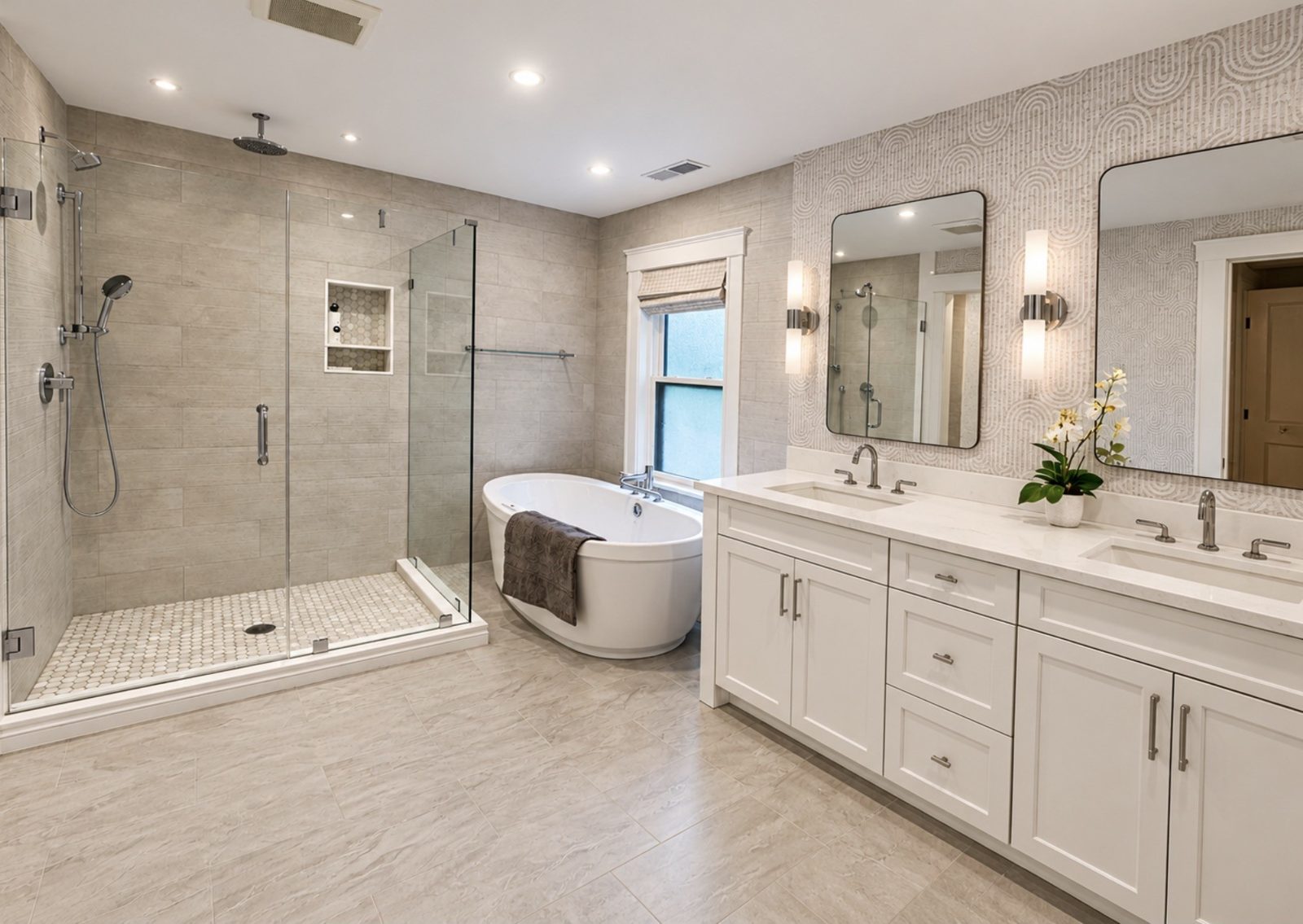
If you see several of the signs above, or you also want a new vanity, tub, lighting or layout, doing everything at once is usually the better plan. The walls are opened only one time, the plumbing is updated while it is exposed, and everything is finished together.
Related: Bathroom remodeling in Newton · Our renovation services · See our projects
Trusted sources: City of Newton, Inspectional Services · City of Newton, Electrical, Plumbing and Gas permits · Mass.gov, Plumbers and gas fitters consumer fact sheet · Mass.gov, Home Improvement Contractor program
More Questions from Newton Homeowners
Can grout be applied over old grout?
Only in a thin layer and only when the old grout is still solid. In most showers we remove it first so the new grout bonds properly.
Will the new grout match the rest of the bathroom?
When we regrout a whole shower, the color is the same everywhere. For a small patch, we match the color as close as possible, and we tell you up front if an exact match isn't possible.
Can you match the original tile in an older Newton home?
Sometimes. We look for the same size and color first. When it can't be found, redoing one full wall or the floor often looks better than a patch.
Do you work in my part of Newton?
Yes. We are based in Newton and work in all of its villages, from Auburndale and West Newton to Waban, Newton Centre and Chestnut Hill.
Final Thoughts
In a Newton home, a tired bathroom and a failing one can look almost the same. The difference is what is happening behind the tile. Check the grout, the tile and the walls around it, and if something feels soft or hollow, have it looked at before you cover it up.
Not sure which one your bathroom needs?
Text us a few photos at (857) 229-2809 and we'll tell you what it needs. Mon–Sat, 8 AM to 6 PM.